
Deputy Chairman of PERHAPI, Ir. Resvani, MBA, emphasized the importance of strengthening critical minerals, strategic minerals, and developing advanced materials as the foundation for industrial and national economic growth towards a Golden Indonesia 2045.

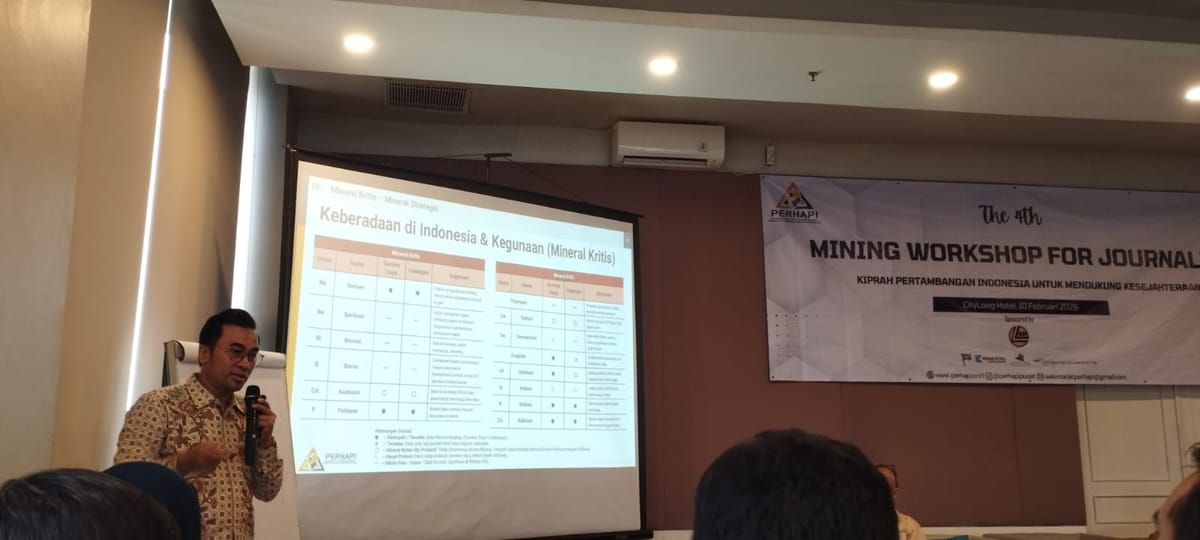
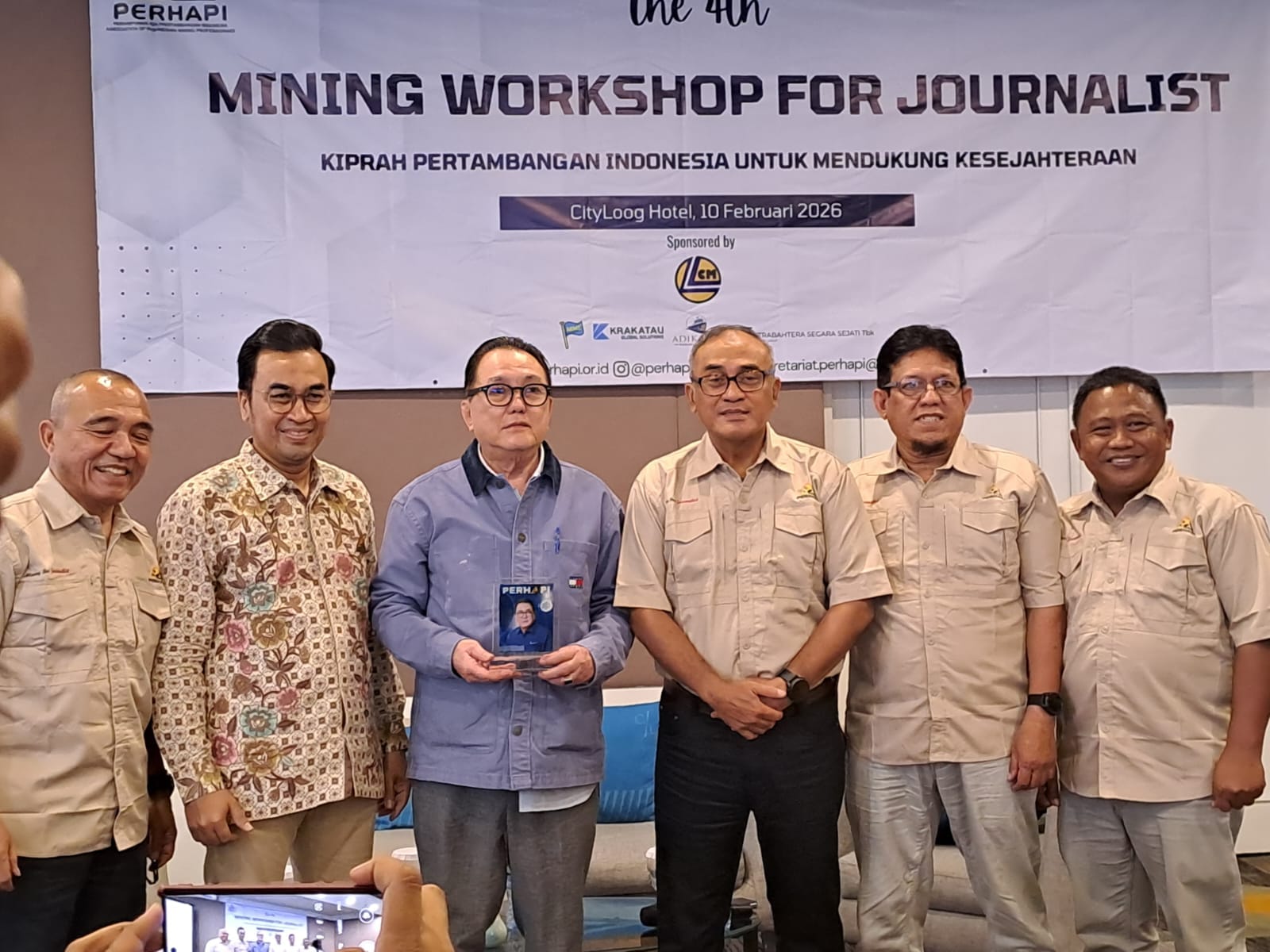
The Indonesian Mining Experts Association (PERHAPI) is holding another event Mining Workshop for Journalists for journalists in Indonesia. In this fourth year, the workshop was divided into three sessions with speakers from the PERHAPI management.
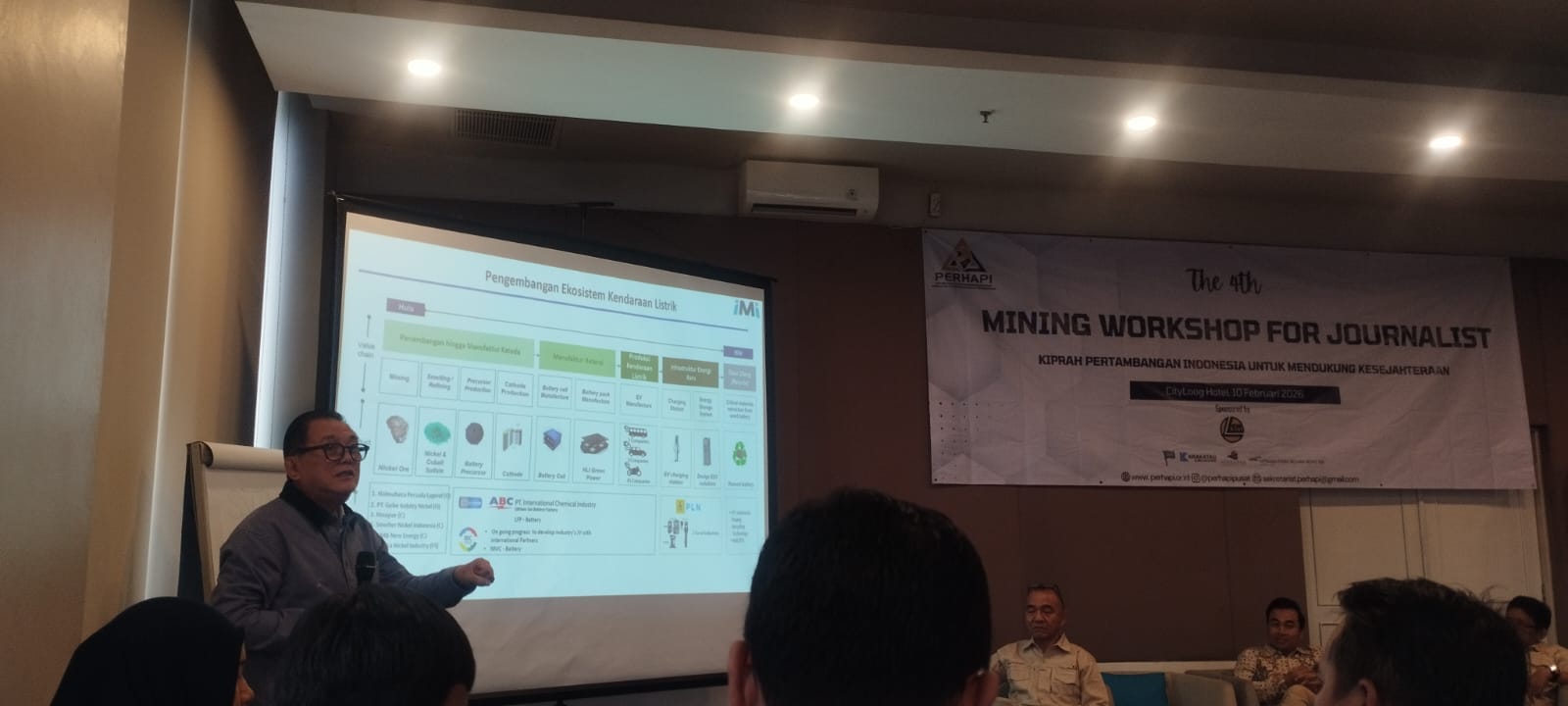
In the first session, Prof. Irwandy Arief explained the importance of critical minerals in supporting the global energy transition process. He emphasized that demand for critical minerals is projected to continue to increase until 2030.
“Demand for critical minerals will increase until 2030. However, if global conditions continue to be as volatile as they are now, no one will dare to invest. Indonesia’s potential is actually extraordinary. The government and the mining industry must have the same vision so as not to lose momentum,” he said.
He also highlighted that the development of the electric vehicle ecosystem in Indonesia still requires adequate infrastructure support. According to him, even though PT Antam is carrying out a battery development project, most electric vehicles currently still use LFP (Lithium Iron Phosphate) batteries. Meanwhile, Indonesia plans to develop NMC (nickel, manganese, cobalt) based batteries.
The first session was continued by the Deputy General Chairperson of PERHAPI, Ir. Resvani, MBA, emphasized the importance of strengthening critical minerals, strategic minerals, and developing advanced materials (advanced materials) as the foundation for national industrial and economic growth towards a Golden Indonesia 2045.
He assessed that global geopolitical changes and the increasing need for minerals for clean energy, high technology and manufacturing open up strategic opportunities for Indonesia as a country with abundant natural resources.
Indonesia is now an important player in the world mineral industry because it has large strategic mineral reserves and is needed by various sectors. One of them is silica which plays an important role in the technology industry as a basic material for computer components and semiconductors that support the development of Artificial Intelligence technology. Based on data from the Taiwan Semiconductor Manufacturing Company (TSMC), the high demand for semiconductor components has also influenced the increase in prices of components such as RAM in recent times.
However, Resvani assesses that the development of the strategic mineral-based manufacturing industry in Indonesia is still not optimal. The low level of exploration activities which results in a lack of upstream data, downstreaming which is still limited to the primary stage, and dependence on imports of advanced materials are a number of main challenges. This condition is exacerbated by weak strategic planning, supervision and investment climate in the mineral and coal sectors.
Furthermore, he emphasized that the mineral and coal sector must be positioned as a strategic instrument for the state. This role includes fiscal instruments, industrial resilience, defense and security, and economic equality.
From a fiscal perspective, mineral and coal policies must not only be oriented towards short-term revenues, but must be directed at creating optimal and sustainable state revenues through prudent reserve management, adaptive fiscal instruments, and increasing business certainty.
Apart from that, the management of critical and strategic minerals also plays a role in ensuring the resilience of national industry through ensuring the supply of raw materials, strengthening downstreaming to advanced materials, and mastering strategic value chains amidst global geopolitical dynamics.
At the same time, the mining sector is expected to be able to become an instrument of economic equality by encouraging regional growth, job creation and improving the welfare of communities in mining areas. In this way, this sector can support Indonesia’s economic transformation towards a developed and sovereign country.
As an illustration, in the last two years the government has made various policy changes in the mineral and coal sector, both through laws and ministerial level regulations. These changes require mining business actors to make significant adjustments in various aspects.
Source: tambang.co.id