
The backfilling mining method is an underground mining method that prioritizes work safety and environmental protection. The main advantage of cut and fill mining is that there is minimal land clearing on the surface so that forests and ecosystems are maintained.

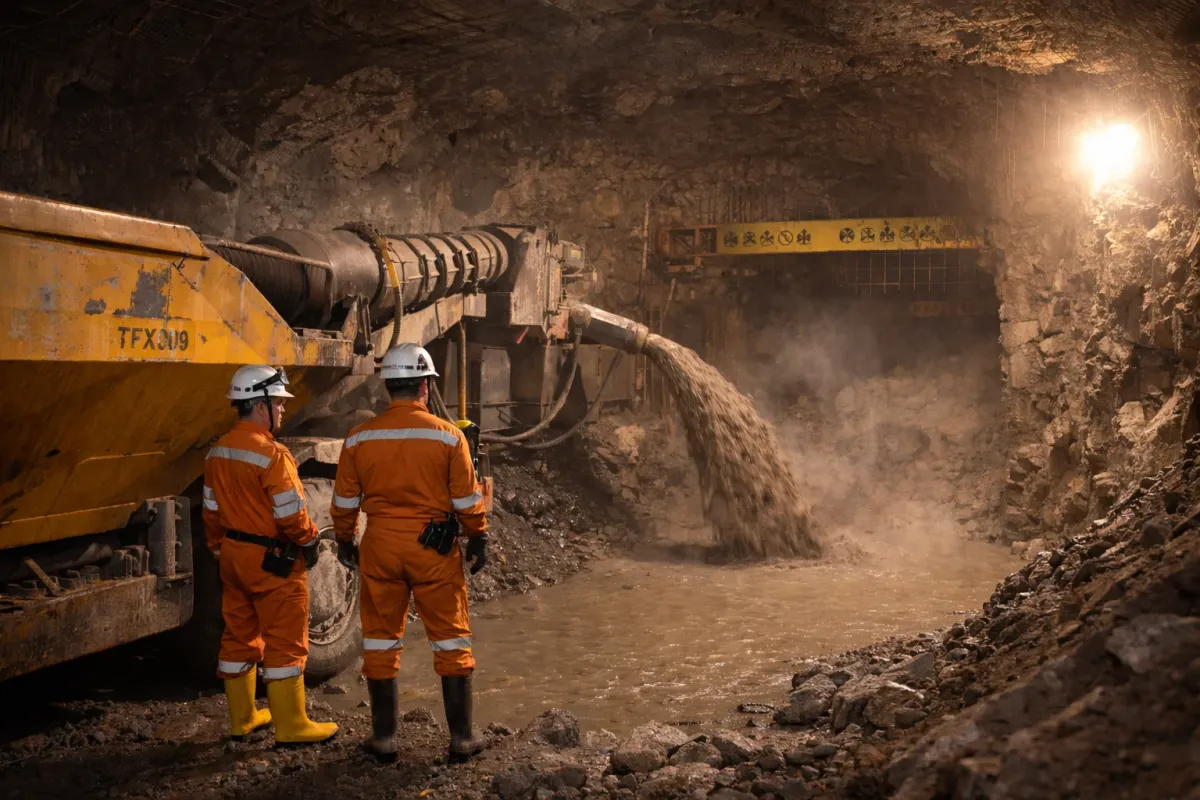
The backfilling mining method is an underground mining method that prioritizes work safety and environmental protection. The main advantage of cut and fill mining is that there is minimal land clearing on the surface so that forests and ecosystems are maintained.
This method is carried out by mining mineral ore in stages and then refilling the ex-mining cavity or backfilling using tailings or leftover processing materials that have been treated so that they comply with quality standards.
This method is supported by modern processing technology, including sulfur processing facilities to ensure the tailings are safe for the environment and society. Before use, the backfill material is mixed with cement to increase strength, stability and prevent seepage into the soil and groundwater.
More than just filling holes, this technique has evolved into a technical strategy to support operational safety while minimizing the ecological footprint.
“This backfill method has been adopted domestically since 2015 and has been proven to be environmentally friendly,” emphasized Chairman of the Downstreaming Division of the Indonesian Mining Experts Association (PERHAPI) Muhammad Toha.
In the past, he continued, there was no thought of processing waste domestically. Since there was a downstream policy, we then thought about how to manage the remaining processing results, including tailings, slag and waste. Thus, the national mining industry adopted the backfill method.
The concept of the backfill method is that mining activities take economical material, which is not economical and then used as cover material. The area that has been mined is closed and then reclaimed and revetted.
The aim is to return the mined material with several technical schemes to ensure that the tailings material returned to the mining area allows it to be reclaimed and plants to grow normally. “In China the results are positive and good, the plants grow well and there are no environmental issues,” he explained.
According to Toha, not all mining waste can be used as filling material. The waste used must meet quality standards, including neutral pH (7-9), pass the TCLP test and radioactivity level test.
Post-mining reclamation activities require a lot of material to cover former mining holes. “There is tailings material that can be used. From the mining side there is a positive solution, there is no difficulty in finding covering material,” he said.
From processing, there is certainty regarding the placement of tailings, namely in backfilling. From an environmental perspective, this is positive, because tailings, slag and waste, if not managed properly, will become a burden on the environment. “With backfilling, environmental burdens can be overcome. This concept has been proven in China,” he stressed.
Several world mining companies use backfilling techniques to reduce tailings, including Linglong Gold Mine (LLGM), China which uses cemented tailings backfill (CTB) to fill voids of mine stope, allowing 15.8 years without the release of new tailings. Then Bluestone Mines Tasmania, which uses cemented paste backfill for soil support, diverted 88,500 tons of tailings/year from surface tailings storage facilities.
One of the mines in Indonesia that plans to implement the backfill method is the underground zinc and lead mine in Dairi, North Sumatra owned by PT Dairi Prima Mineral.
The application of this method in Indonesia can be carried out after meeting technical and environmental requirements and obtaining official technical permits from the government.
Meanwhile, Director of the Center for Energy and Mining Law Studies (Pushep) Bismar Bakhtiar assessed that mining companies operating in Indonesia are taking precautions and mitigation by carrying out post-mining reclamation. “As long as mining is done using good mining practices, it is safe,” he stressed
Source: tambang.co.id