Introduction: Why Sustainable Mining Matters Today
The world’s transition to clean energy, electric mobility, and digital technologies has created an unprecedented demand for minerals like lithium, cobalt, copper, and rare earths. Yet, mining—essential for these materials—comes with environmental risks, social challenges, and resource pressures. Sustainable Mining is the modern solution. It ensures that minerals are extracted responsibly, with minimal environmental harm, efficient resource use, community well-being, and long-term ecological balance.
Sustainable mining isn’t just an ethical choice—it is a business imperative driven by global ESG expectations, stricter regulations, and community demand for transparency and shared benefits.
What Is Sustainable Mining?
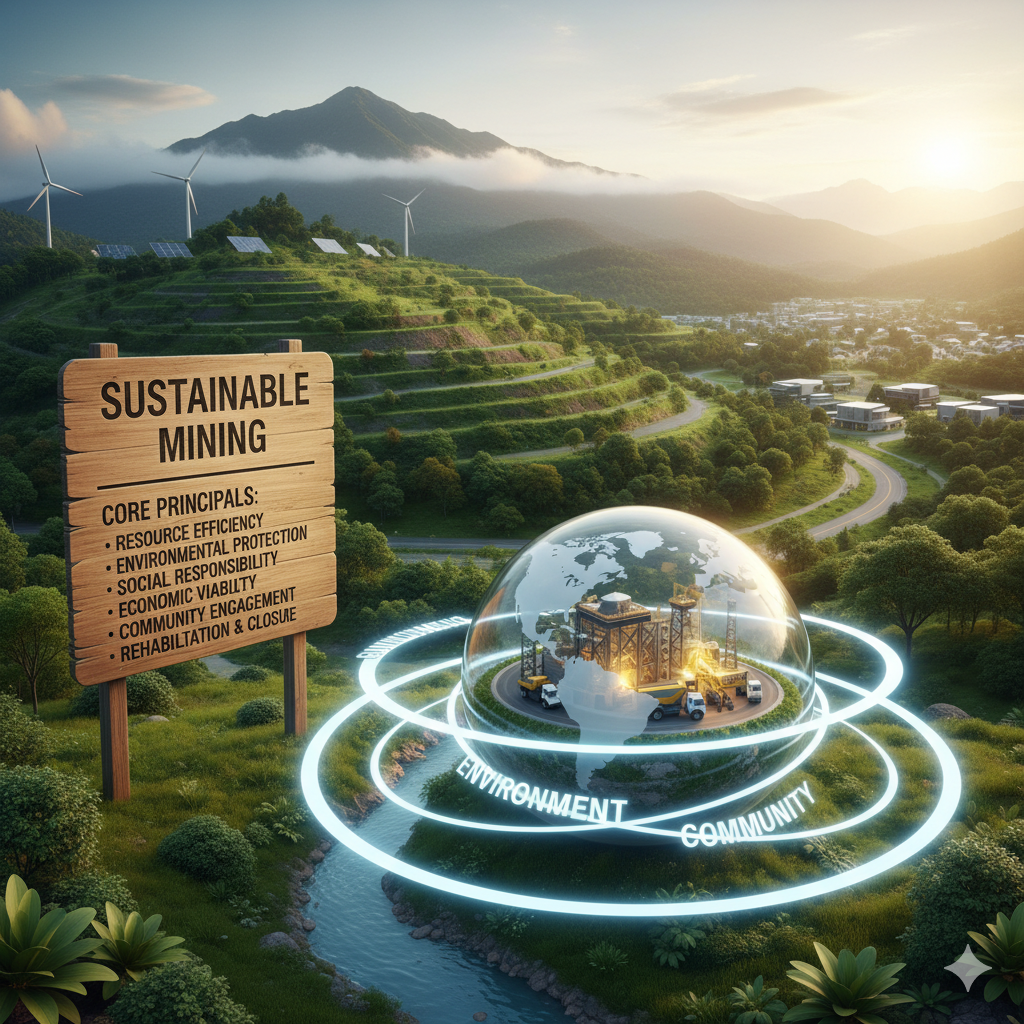
Sustainable mining is a holistic and responsible approach to mineral extraction that balances economic growth with environmental care and future-ready industry. It focuses on minimizing ecological damage, conserving resources, reducing emissions and waste, protecting biodiversity, ensuring worker safety, and empowering local communities. By combining ethical practices, advanced technology, and long-term planning, sustainable mining transforms traditional operations into cleaner, safer, and future-ready systems—supporting global development without compromising the planet’s health or the wellbeing of future generations.
The 7 Core Principles of Sustainable Mining
- Responsible Land Use & Progressive Rehabilitation
Restoring disturbed land is a foundational element of sustainable mining.
Effects
- Minimizes long-term ecological damage
- Supports soil recovery and vegetation growth
Uses
- Reclamation for agriculture
- Conversion into solar farms, lakes, or public parks
Advantages
- Enhances biodiversity
- Builds brand trust
- Improves land value
Disadvantages
- High rehabilitation costs
- Requires long-term monitoring
Examples
Transforming mined pits into rainwater reservoirs or community recreation zones.
- Efficient Water Management & Conservation
Mining consumes large volumes of water; sustainability means using it wisely.
Effects
- Reduced pressure on local water bodies
- Fewer conflicts with surrounding communities
Uses
- Recycled process water
- Treated mine water for dust suppression
Advantages
- Lower water procurement costs
- Minimizes contamination risk
Disadvantages
- Setting up recycling systems requires major investment
Examples
Closed-loop water systems in beneficiation plants achieving up to 90% water reuse.
- Zero-Waste Mining & Tailings Stewardship
Responsible waste management prevents toxicity and environmental hazards.
Effects
- Reduced soil and water pollution
- Safer environment for communities
Uses
- Tailings as aggregates for construction
- Waste rock used for backfilling
Advantages
- Lower storage and disposal costs
- Enhanced mine safety
Disadvantages
- Tailings dams require continuous monitoring
- Failures can be catastrophic
Examples
Dry stacking of tailings used widely in Canada & Australia to reduce water risk.
- Emission Control & Climate-Smart Operations
Reducing carbon emissions is key for global climate goals.
Effects
- Water cleaner
- Smaller carbon footprint
Uses
- Electric mining trucks
- Renewable-powered operations
Advantages
- Reduced fuel expenditure
- Compliance with global climate standards
Disadvantages
- High cost of transitioning to electrified fleets
Examples
Solar-powered conveyor systems and hybrid haul trucks.
- Biodiversity Conservation & Ecological Protection
Mining sites often overlap fragile ecosystems; protection is non-negotiable.
Effects
- Safeguards endangered species
- Maintains ecological balance
Uses
- Wildlife corridors
- Green belt plantations
Advantages
- Smooth environmental clearances
- Higher ESG ratings
Disadvantages
- Long-term ecological studies required
- Higher implementation costs
Examples
Buffer zones maintained around mining areas to allow safe wildlife movement.
- Worker Well-Being, Safety & Modern Workforce Protection
Safety remains the backbone of sustainable mining.
Effects
- Reduced accidents
- Improved employee morale
Uses
- Digital safety sensors
- Fatigue monitoring systems
- Automated warning systems
Advantages
- Higher productivity
- Saves lives
Disadvantages
- Skilled training required for technology adoption
Examples
Collision-avoidance systems installed in underground mining fleets.
- Community Empowerment & Inclusive Development
Mining operations must uplift—not harm—local communities.
Effects
- Better social acceptance
- Long-term community trust
Uses
- Skills training programs
- Local hiring
- Healthcare and education initiatives
Advantages
- Strong social license to operate
- Improved reputation and community support
Disadvantages
- Requires consistent investment
- Rising expectations for continuous benefits
Examples
Skill-development centers for local youth enabling employment beyond mining.
Technological Advancements Driving Sustainable Mining
Remote Sensing & Satellite Monitoring
- Real-time vegetation and land health tracking
- NDVI analytics for rehabilitation performance
- Detects illegal mining and environmental violations
AI-Based Environmental Monitoring
- Predicts environmental impacts
- Optimizes ore extraction and reduces waste
Blockchain for Ethical Mineral Supply Chains
- Every extraction step becomes traceable
- Prevents illegal or conflict mineral sourcing
- Required by global manufacturers
Fleet & Resource Management Tools
- Reduces fuel consumption and emissions
- Extends equipment life
- Cuts operational costs
The Road Ahead: The Future of Sustainable Mining
- Smart Autonomous Mines
AI-driven equipment, drones, and autonomous vehicles improve accuracy, reduce human intervention, and ensure safer operations; optimizing haulage, drilling, and blasting cycles, resulting in higher productivity and lower operational costs.
- Zero-Waste Mining
Every mineral by-product is reused, recycled, or repurposed, turning waste streams into valuable resources. This circular approach lowers landfill dependency, reduces environmental impact, and improves overall material efficiency.
- Carbon-Neutral Mines
Renewable energy sources like solar, wind, electrified fleets significantly cut carbon emissions. Transitioning to green power reduces operational costs over time and positions of mining companies as sustainability leaders.
- Real-Time Digital Monitoring
IoT devices, drones, satellites, and digital twins provide live data on environmental conditions and equipment health. This continuous visibility helps prevent hazards, ensure compliance, and support faster, data-driven decision-making.
- Stronger ESG Governance
Clear reporting frameworks ensure transparency in environmental performance, social impact, and ethical sourcing. Better governance builds community trust, attracts investment, and helps companies meet global sustainability standards.
Conclusion: Mining for People, Planet & Prosperity
Sustainable mining is the future—and the only path forward. By embracing the 7 core principles mining can evolve into a cleaner, smarter, and more inclusive industry. This transformation balances resource extraction with environmental protection, ensures community well-being, strengthens global supply chains, and supports the world’s transition to a green, resilient, and equitable future. Sustainability in mining is not just a target—it is a commitment to future generations.
Source: www.miningdoc.tech