
Jakarta, MINE — The Gadjah Mada Engineering Alumni Family (KATGAMA) held a focus group discussion forum (FGD) to discuss the readiness and challenges of building a Nuclear Power Plant (PLTN) in Indonesia.
The General Chair of KATGAMA, Singgih Widagdo, emphasized that nuclear development requires a comprehensive approach because of its high complexity.
“We hope that with this FGD, nuclear will be discussed in full planning, because there are many challenges. Will we develop it later? small modular reactors or large reactors, whether small ones already proven“This is an important question,” said Singgih Widagdo in his speech at the FGD UGM Nuclear Readiness Forum 2026 titled “From Commitment to Execution: Advancing Indonesia’s Nuclear Power Program” in Jakarta, Wednesday (22/4).
He added that it is hoped that this discussion will produce clearer policy direction.
“We want to have conclusions during the FGD, both from a technical, economic, social, especially security perspective. We also raise aspects acceptance or public acceptance, and of course very complex geopolitical aspects,” he added.
According to Singgih, KATGAMA wants to continue to play a role in the journey of national nuclear development. “Regardless of what form it will take, at least we will be part of the nuclear journey in Indonesia,” he added.
Meanwhile, the Dean of the Faculty of Engineering, Gadjah Mada University, Selo, highlighted that Indonesia has long had the foundation to develop nuclear energy.
“In 1978, UGM established the Nuclear Engineering Study Program. The hope was that by then Indonesia would have a nuclear power plant to meet its energy needs, but to this day we don’t have one,” he said.
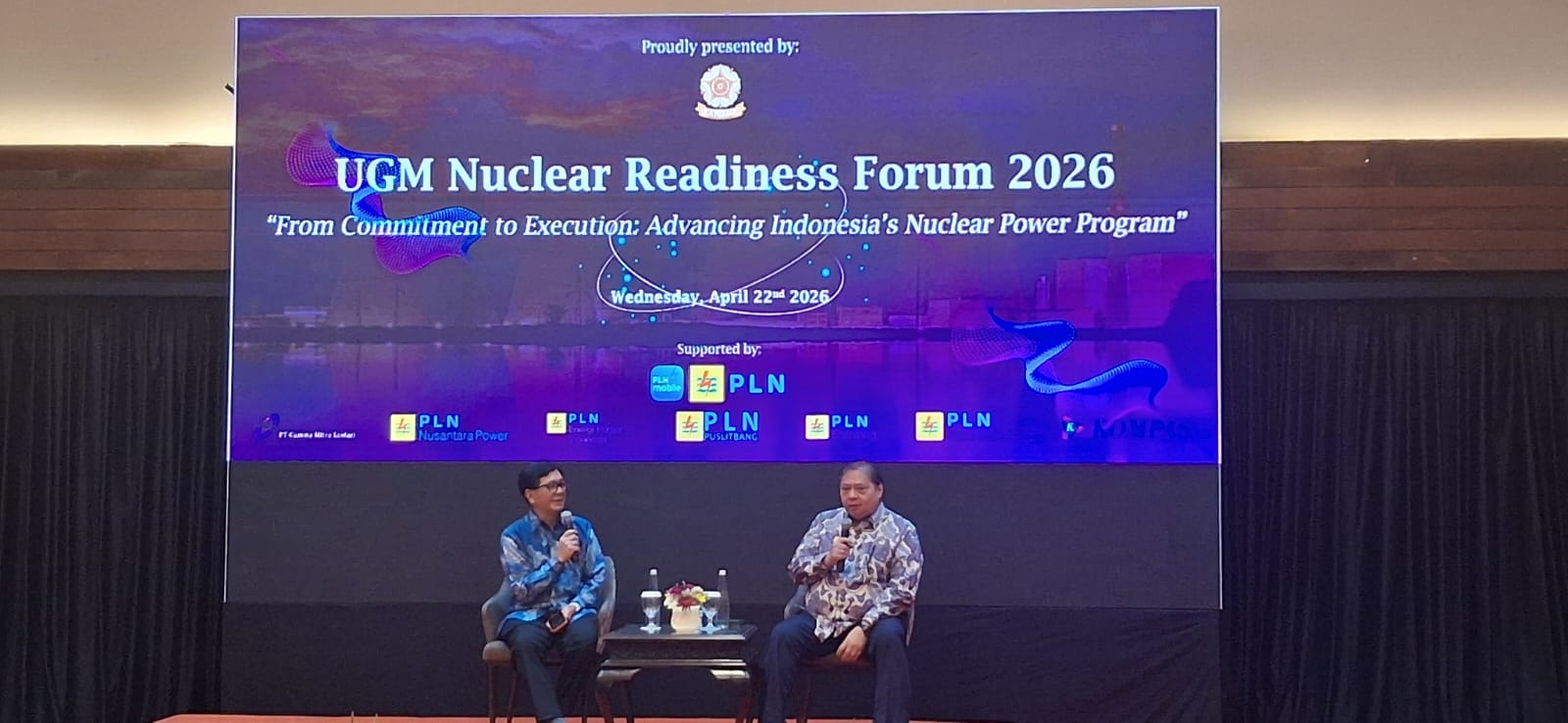
He considered the momentum of this discussion important to revive this agenda. “Today’s event is very strategic because it revives our enthusiasm about how a nuclear power plant could one day be established in Indonesia,” he said.
Selo emphasized that the ever-increasing national energy needs require diversification of energy sources. “When we talk about economic growth, it really depends on energy. Unfortunately, the energy that currently dominates still comes from fossils,” he explained.
He also underlined the limitations of new renewable energy. he said. energy from solar, wind and waves is its nature intermittent. “Wind depends on speed, sun depends on weather. Nuclear is a more stable alternative than that,” he said.
However, he reminded that the main challenge is not technology. “In terms of technology, countries like Japan, Germany and France have been building nuclear power plants for a long time. Our biggest challenge is the social aspect, especially public acceptance,” he stressed.
In terms of human resources, Selo is optimistic that Indonesia is quite ready. Every year UGM accepts around 60 students in the Nuclear Engineering Study Program. “
They study various nuclear technologies, from reactors to accelerators. “So from the HR side, I think we already have provisions,” he added.
Support for the development of nuclear power plants was also conveyed by the Coordinating Minister (Menko) for Economic Affairs, Airlangga Hartarto. He said that the government had included nuclear in its long-term energy strategy.
“In RUEN, our target in 2060, around 8 percent comes from new and renewable energy, including nuclear. Indonesia also has reserves of more than 5,000 tons of uranium and around 4,700 tons of thorium,” said Airlangga on the same occasion.
Airlangga emphasized that the government has set an operational target for the first nuclear power plant which is targeted to operate in 2032.
“We are targeting the nuclear power plant to be operational in 2032. This means that if the construction time is around five years, then by 2027 a decision must be made,” he said.
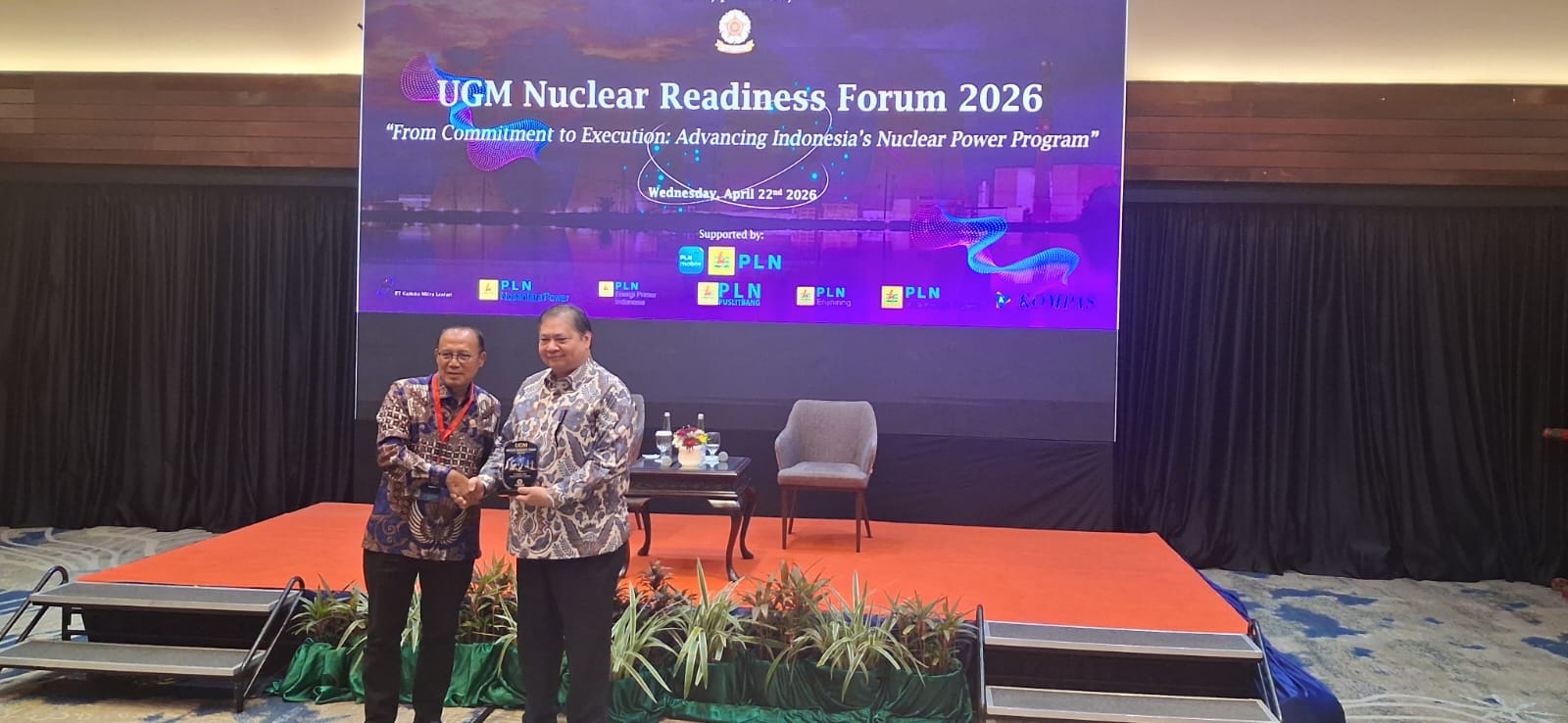
He also explained the initial capacity and location plans for development. “Our target in 2040 is to reach 7 gigawatts. For the initial stage, the locations being prepared include Bangka Belitung and West Kalimantan, each with around 250 megawatts,” he explained.
According to him, Indonesia’s readiness is also supported by regulations and infrastructure. “In terms of NPP requirements, we have mastered 16 of the 19 aspects. Apart from that, the President has issued Presidential Regulation Number 40 of 2025, so that the regulatory and institutional infrastructure has been prepared,” he said.
With these various statements, the signal of readiness for nuclear power plant development in Indonesia is getting stronger. However, successful implementation will still depend heavily on social readiness, public trust and policy consistency in the long term.
Source: tambang.co.id