
In general, the fuel shortage at a number of private gas stations in the country was motivated by two important things, namely a crisis of confidence in the quality of Pertamina’s fuel and the soaring consumer demand for fuel at private gas stations.
The public and private gas station operators began to doubt the quality standards of Pertamina’s subsidized and non-subsidized fuel after reports emerged that there were indications of “blending” or mixing products that were considered lower, as well as accusations of using octane that did not meet standards. This issue encourages consumers and business actors to switch preferences to private gas stations as an alternative and worsens the fuel shortage that is starting to be felt.
In general, the fuel shortage at a number of private gas stations in the country was motivated by two important things, namely a crisis of confidence in the quality of Pertamina’s fuel and the soaring consumer demand for fuel at private gas stations.
The public and private gas station operators began to doubt the quality standards of Pertamina’s subsidized and non-subsidized fuel after reports emerged that there were indications of “blending” or mixing products that were considered lower, as well as accusations of using octane that did not meet standards. This issue encourages consumers and business actors to switch preferences to private gas stations as an alternative, thereby increasing the potential for fuel shortages in retail areas.
Apart from that, issues regarding the quality and completeness of regulations such as QR codes for purchasing subsidized fuel also make consumers bored of queuing or doubt subsidized products, so they choose non-subsidized fuel from the private sector, increasing the demand burden on private gas stations. This condition causes fuel stocks to run low and adds pressure to the supply chain.
The migration of consumers to private gas stations such as Shell, BP-AKR, and Vivo resulted in a surge in demand which made the private sector run short of fuel stocks, thus triggering requests for additional import quotas. This spike also explains the disruption in fuel distribution which then triggers fuel shortages in several areas.
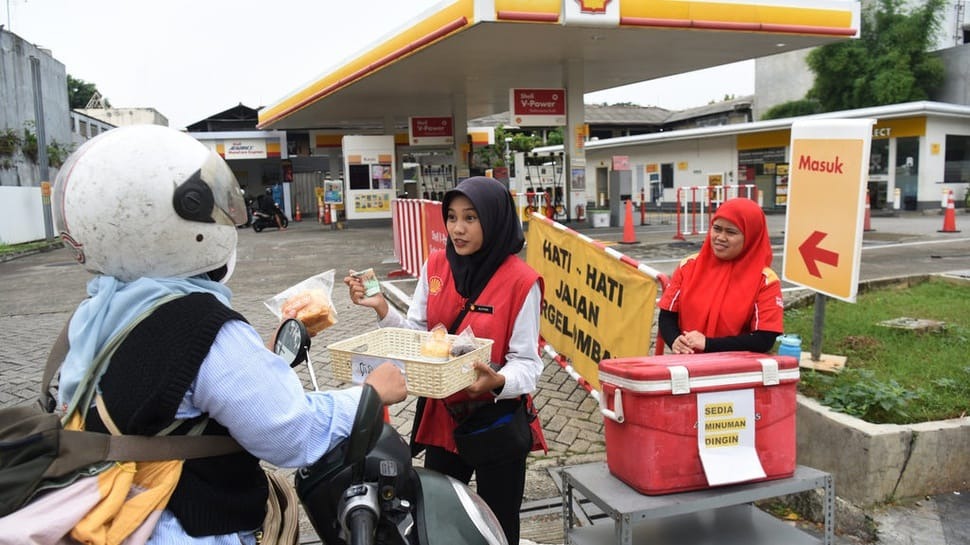
The market share of private gas stations in Indonesia is only 6%, but they still need national assistance to meet consumer demand amidst the increasing issue of fuel shortages. Previously, for 2025 the private sector was given an additional import quota of around 10% compared to actual imports in 2024 (total 110%), but still experienced a shortage of fuel stocks. This has given rise to requests for additional import quotas from the government because the fuel supply crisis is becoming increasingly visible.
However, this request is not an easy thing. The fuel import quota is closely related to the country’s foreign exchange so it must be limited and controlled wisely. Moreover, until now Indonesia has not been able to manage fuel subsidy quotas which are not fully on target. This situation of fuel scarcity means the government must maintain a balance between energy needs and the country’s fiscal space.
Therefore, the government, especially the Ministry of Energy and Mineral Resources, responded to the request for additional import quotas with an alternative alternative for additional import quotas from Pertamina through the subholding PT Pertamina Patra Niaga as the state’s representative so that there is quality control and completeness of regulations and preventing fuel shortages on a national scale.
The government guarantees that this alternative is carried out using a business-to-business (B2B) scheme without any additional costs from Pertamina. With a single-door import system only through Pertamina, distribution and quality can be controlled, and documentation and regulations are met to prevent the risk of recurring fuel shortages.
The government facilitates private operators to purchase imported base fuel/gasoline from Pertamina which has been imported as part of a collaborative effort. The Ministry of Energy and Mineral Resources regulates quality specifications (including ethanol content), procurement documentation (certificates of origin), as well as compliance with international regulations as requirements that must be met so that fuel imports and distribution run legally and safely and do not exacerbate fuel shortages.
However, quality standards (including ethanol content), certification of origin, international documentation requirements, and oil and gas regulatory provisions make the import or use of certain base fuels difficult for some private gas stations to accept. This technical incompatibility is one of the causes of rejection by several private operators and prolonging fuel shortages in several areas.
Vivo Energy Indonesia, which had previously agreed to purchase 40,000 barrels of fuel from Pertamina’s base-fuel import stock of 100,000 barrels, chose to cancel the collaboration due to a technical discrepancy in the ethanol content of the base-fuel, which contains 3.5% ethanol. Then, BP-AKR, which was also interested in this collaboration, did not agree because it was looking for base-fuel without ethanol content and other problems such as the unavailability of a certificate of origin for fuel imported by Pertamina. Shell itself is still in discussions regarding this collaboration. This negotiation situation makes it difficult for fuel shortages to subside.
| Time | Main Events | Actor | Implications |
|---|---|---|---|
| End of August 2025 | Several private gas stations are starting to report low gasoline stocks, especially non-subsidized products, and are starting to reduce operating hours because supplies are disrupted. | Shell, BP-AKR, Vivo, local gas stations | The public is starting to feel the shortage, queues at private gas stations are increasing. |
| Mid September | The government allows private gas stations to import fuel through Pertamina; Pertamina arranges base fuel offers from imports to private operators. | ESDM, Pertamina, private | There was an offer of 100,640 barrels of base fuel, some of which was offered to Vivo and others; However, there was a delay because the specifications had not been accepted by all parties. |
| Mid September | Vivo rejected the order because of the 3.5% ethanol content; BP-AKR also mentioned the issue of certificate of origin. | Vivo, BP-AKR, Pertamina | Transaction delays create uncertainty on the part of private gas stations regarding the quality and legality of imports. |
| Mid September | The government emphasized that imports must go through Pertamina; An additional quota of ±10% has been given compared to the previous year. The private sector is encouraged to cooperate. | ESDM, Minister Bahlil, private gas stations | Quota restrictions, regulatory controls, but also criticism from the private sector which considers this step to limit their flexibility. |
| September – October | Arrived base fuel cargo ~100,640 barrels; Pertamina offered part of the cargo to the private sector, Vivo agreed to absorb some; however technical distribution and negotiations are still ongoing. | Pertamina, Vivo, Shell, BP-AKR | Concrete steps, but the process is not immediately uniform; Some gas stations are still unable to fulfill requests for technical documents or specifications. |
| Until now | The government claims that the national fuel stock is relatively safe for a period of around 18-22 days; There will continue to be coordination meetings, supervision and regulation of imports so that there are no shortages at private gas stations in the long term. | ESDM, Pertamina, DPR | Several private gas stations are still reported to experience unstable supply; The public is still observing developments in technical specifications and distribution certainty. |
In carrying out their business in Indonesia, each fuel business actor, both government and private, has carried out in accordance with existing regulations. However, high demand from the private sector gave rise to a long dramatization in Indonesia, especially when fuel shortages began to become a public concern.
Publication of shortages and operational disruptions
Private gas stations such as Shell and BP-AKR reported that stocks of many petrol products were out of stock while gas stations only sold diesel, and reduced operating hours. This was voiced publicly to increase pressure on import regulations. This situation further highlights the fuel supply crisis.
Official statements and media statements
Private media uses news about long queues, empty gas stations, and consumer anxiety as a tool to accelerate government intervention. For example, the statement that private gas stations should be given larger quotas or direct import access. This news amplifies the narrative of fuel scarcity.
Political lobbying and institutional advocacy
Through gas station management associations and dialogue with the government, the private sector maps import needs, technical specifications and demands for the elimination of administrative barriers. They are urging a revision of regulations so that direct imports are easier or that alternatives to Pertamina are more efficient.
Public communication strategy
Spreading information about supply reductions and the impression that the “one door import” policy could create a monopoly or burden them as small retailers thereby gaining public sympathy. The public responded with criticism of the government and Pertamina amidst the mounting issue of fuel shortages.
The government, through the Director General of Oil and Gas and Pertamina, is negotiating with the private sector to align the specifications of imported products (ethanol content, environmental standards, origin of goods) to suit the needs of private gas stations. If the specifications are accepted, transactions can run more smoothly and can help ease fuel shortages.
In addition, the Government reports that the national fuel stock is quite safe (around 18-22 days), and periodically evaluates imports and distribution at private gas stations to avoid sudden shortages again. The government is also paying attention to disruptions in fuel distribution from the private sector.
The government asks private business entities to provide input for making import policies in 2026 so that they are more responsive to market needs. It is hoped that import quota arrangements, administrative mechanisms and quality standards will continue to be improved so that fuel shortage conditions no longer recur.
Collaboration between supervisory institutions including the KPPU (Business Competition Supervisory Commission) which has raised the alarm about potential unhealthy practices due to import restrictions, so that there is regular policy evaluation so that competition is maintained and does not worsen fuel shortages. Keep up to date with the latest news in the world of mining and oil and gas only at Minercommedia
Source: www.minercomedia.com